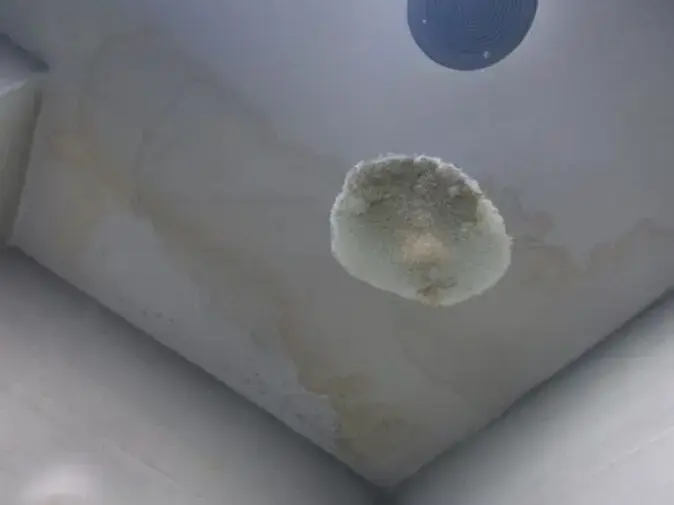
Ceiling Leak Water Damage in Santa Monica, CA
A brown ring or a bulge in the ceiling means water is already sitting above it. The restoration team finds the source, makes a sagging ceiling safe and dries the cavity before it spreads.
(888) 563-9619Ceiling stained or sagging? Call nowHow ceiling leak water damage is handled in Santa Monica
A ceiling leak is a symptom of water somewhere above. The response team makes the ceiling safe, traces the water back to its source with thermal imaging and dries the joist bays and insulation, not just the paint.
First steps for ceiling leak water damage in Santa Monica
- 1
Stop the water above
Shut off the bathroom fixture or the main if the source is plumbing.
- 2
Clear the area below
Move people, furniture and electronics out from under the stain.
- 3
Kill the light circuit
Switch off the breaker for fixtures in the wet ceiling.
- 4
Catch and record
Put a bucket under drips and photograph the ceiling before it changes.
What does ceiling leak water damage cost in Santa Monica, CA?
In Santa Monica, CA, ceiling leak water damage restoration typically runs $800 to $5,500, depending on the size of the wet area, whether drywall or plaster must come down, the insulation above and whether the leak also reached walls and floors.
Small stain, caught early
- Source traced
- Dry-in-place with access holes
- Daily readings
Sagging section removed
- Ceiling opened safely
- Wet insulation removed
- Cavity drying
Plaster or large ceiling
- Plaster monitored and removed
- Walls and floor below dried
- Claim documentation
For a closer planning number, try the water damage cost calculator. The final price is set by the restoration company once it has seen the loss.
How ceiling leak water damage is dried
- 1
Map the moisture
Before a single fan is set, the tech who does the walkthrough scans floors, walls and ceilings with thermal imaging and pinless meters and draws the wet edge.
- 2
Pull the water
The extraction crew pulls standing water out through truck-mounted hoses or portable units, whichever reaches the unit, so it leaves the building.
- 3
Set the drying
The drying team places air movers and LGR dehumidifiers room by room, sized to the load and to how damp the coastal air is that week.
- 4
Read, log, verify
Every day the readings go into a log, and the equipment stays until each wet material matches its dry reference within 2 to 4 points.
In two-story Santa Monica homes, the ceiling under an upstairs bathroom takes the water from a leaking toilet seal, a failed tub drain or a supply line in the floor above. Older homes north of Montana often have plaster and lath ceilings, which hold water heavily and can let go in large pieces. Newer homes and remodels use drywall, which sags and stains before it breaks.
Warning signs above your head
- A yellow or brown ring that grows after someone showers upstairs
- Paint bubbling or peeling in one spot
- A soft or bulging area in the drywall
- Water dripping from a light fixture or a ceiling vent
- Cracks spreading across an old plaster ceiling
Never poke a bulging ceiling from directly below, and never touch a light fixture with water coming out of it. Cut that circuit at the breaker panel, as long as the panel area is dry.
Finding the source before drying the ceiling
A ceiling leak is a symptom. The tech who does the walkthrough uses thermal imaging to trace the cool, wet pattern back toward its source, whether that is a bathroom, a supply line, an attic air handler or the roof. Roof water in winter storms looks similar but is handled as a different job, covered on the roof leak page. Once a plumber or roofer stops the source, the mitigation team opens the ceiling where the drywall or plaster is saturated, which also lets the joists and insulation above dry.
Drying the cavity above
Wet insulation in the joist bays is usually removed, because it holds water against the framing. Air movers direct air into the open cavity and LGR dehumidifiers pull the moisture out of the room. Readings on the joists and subfloor above are logged daily until they meet the drying goal. If the ceiling was only damp and the drywall stayed firm, it can sometimes be dried in place with small access holes. The EPA cleanup page explains why damp ceiling cavities need to be dried fast, and the Consumer Product Safety Commission lists recalls on fixtures and supply parts that fail.
Where the team handles ceiling leak water damage around Santa Monica
The restoration team covers all of Santa Monica, from North of Montana and Wilshire Montana to Ocean Park, Main Street and Sunset Park, plus Venice, Brentwood, Mar Vista and West Los Angeles.
ZIP codes 90401, 90402, 90403, 90404 and 90405.
See every area coveredCeiling Leak Water Damage in Santa Monica: common questions
Is a sagging ceiling dangerous?
Yes. Wet drywall and especially wet plaster are heavy and can fall without warning. Keep people and pets out from under it and switch off lights in that area until it is made safe.
Can a water-stained ceiling stay up and be dried?
Sometimes. If readings show the drywall stayed firm and the source was caught quickly, the cavity can be dried through small access holes. Saturated or sagging material is removed.
How is the source of a ceiling leak found?
Thermal imaging shows the wet pattern, and moisture meters confirm it. The pattern usually points to a bathroom, a supply line, an air handler drain or the roof.
Why are old plaster ceilings handled differently?
Plaster and lath hold more water and dry slower than drywall, and wet plaster can detach in large pieces. It is monitored longer and removed if it has lost its grip on the lath.
How long does ceiling drying take?
An opened ceiling cavity often dries in two to four days. Plaster and multi-layer ceilings take longer, and the drying team pulls equipment only when readings meet the goal.
Is ceiling leak damage covered?
A sudden leak from plumbing is commonly covered, while slow leaks and roof wear may be treated differently. Coverage depends on your policy, so it is worth checking with your own insurer.
Water coming through a Santa Monica ceiling? Call now.
A wet ceiling gets heavier every hour. The mitigation team makes it safe, finds the source and dries the cavity above.