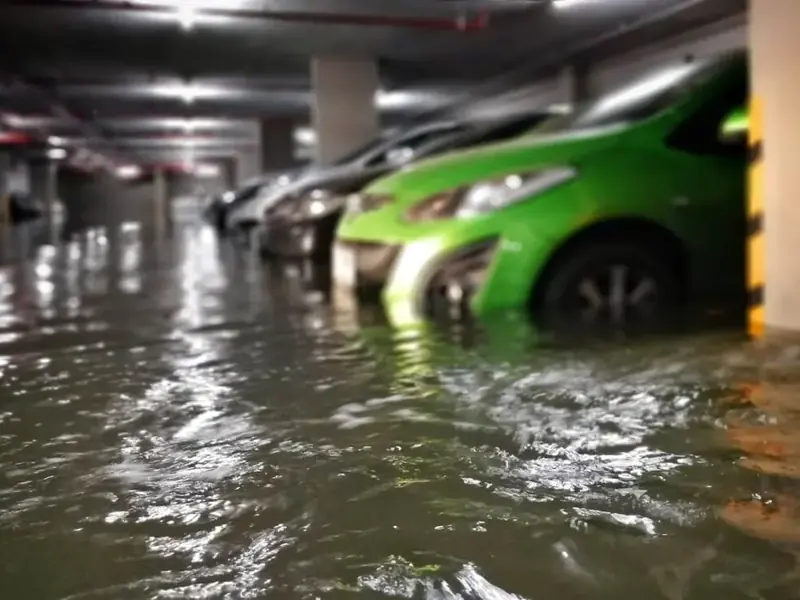
Storm and Below-Grade Flooding Cleanup in Santa Monica, CA
Heavy winter storms send runoff down driveways and ramps into garages, low entries and below-grade rooms. The restoration team pumps it out, cleans it as contaminated water and dries the structure.
(888) 563-9619Runoff in the garage or a low room? Call nowHow storm and below-grade flooding cleanup is handled in Santa Monica
Storm runoff is handled as Category 3 from the first minute. The extraction crew pumps and extracts, the mitigation team removes what the runoff soaked and cleans what stays, and the drying team dries concrete and framing to the readings.
First steps for storm and below-grade flooding cleanup in Santa Monica
- 1
Stay out of moving water
Never walk or drive through water flowing into a garage or down a ramp.
- 2
Cut power to low areas
Switch off breakers for flooded rooms only if the panel is dry and safe to reach.
- 3
Photograph the water line
Record the height of the water on walls and belongings.
- 4
Keep away from runoff
Treat the water as contaminated; wear boots and gloves if you must enter.
What does storm and below-grade flooding cleanup cost in Santa Monica, CA?
In Santa Monica, CA, storm and below-grade flooding cleanup typically runs $1,800 to $12,000, depending on the depth and area of the water, the amount of contaminated material to remove, whether it is a shared garage or a single room, and how long drying of concrete takes.
One low room or entry
- Extraction
- Porous materials removed
- Antimicrobial and drying
Garage conversion or unit
- Drywall cut above water line
- Contents sorting and photos
- Concrete drying
Shared or subterranean garage
- Submersible pumping
- Section-by-section cleanup
- Desiccant drying
For a closer planning number, try the water damage cost calculator. The final price is set by the restoration company once it has seen the loss.
How storm runoff flooding is cleaned up and dried
- 1
Map the moisture
Before a single fan is set, the tech who does the walkthrough scans floors, walls and ceilings with thermal imaging and pinless meters and draws the wet edge.
- 2
Pull the water
The extraction crew pulls standing water out through truck-mounted hoses or portable units, whichever reaches the unit, so it leaves the building.
- 3
Set the drying
The drying team places air movers and LGR dehumidifiers room by room, sized to the load and to how damp the coastal air is that week.
- 4
Read, log, verify
Every day the readings go into a log, and the equipment stays until each wet material matches its dry reference within 2 to 4 points.
Santa Monica sits on a gentle slope down to the bay, and when a winter storm drops inches of rain in a day, the storm drains that carry runoff toward outlets like the Pico-Kenter drain beside the pier can back up at street level. Water then follows the lowest path: down a driveway ramp into subterranean parking, under a door into a sunken living room, or into a converted garage that sits at driveway grade.
Where storm water gets in
- Subterranean and tuck-under garages in apartment and condo buildings
- Sunken rooms and step-down entries in older homes
- Converted garages and backyard units built at grade
- Basement storage and utility rooms in hillside and canyon homes
- Door thresholds where patios slope toward the house
Storm runoff is Category 3 water. It carries street oil, fertilizer, animal waste and debris, so porous materials it soaks are removed rather than dried.
How runoff cleanup is handled
The extraction crew pumps out deep water with submersible pumps and extracts the rest. Because runoff is contaminated, the mitigation team removes carpet, pad, cardboard, drywall below the water line and anything porous it touched. Concrete, framing and other hard surfaces get cleaned and an EPA-registered antimicrobial before any drying equipment starts. In a shared garage, the restoration team coordinates with the building manager so parking areas can reopen in sections.
Drying below grade near the coast
Below-grade spaces dry slowly because concrete walls and slabs hold water and the air down there is damp even in summer. LGR dehumidifiers, and desiccant units for dense concrete, run with air movers until readings on the slab and walls meet the drying goal. Storm flooding is usually a flood-policy question rather than a standard homeowner claim, and FloodSmart.gov explains how flood coverage works. Ready.gov flood safety covers why you should never walk or drive through moving water.
Where the team handles storm and below-grade flooding cleanup around Santa Monica
The restoration team covers all of Santa Monica, from North of Montana and Wilshire Montana to Ocean Park, Main Street and Sunset Park, plus Venice, Brentwood, Mar Vista and West Los Angeles.
ZIP codes 90401, 90402, 90403, 90404 and 90405.
See every area coveredStorm and Below-Grade Flooding Cleanup in Santa Monica: common questions
Is storm water in a garage really contaminated?
Yes. Runoff from streets and yards is treated as Category 3 water because it carries oil, chemicals, bacteria and debris. Porous materials it touched are removed.
Can drywall in a flooded garage conversion be dried?
Drywall touched by runoff is cut out above the water line, because contaminated water soaks into it. The framing behind it is cleaned, treated and dried.
How is water pumped out of a subterranean garage?
Submersible pumps move deep water to an approved discharge point, then extraction tools remove the rest. The building's own sump or drain system is checked as part of the job.
Why do below-grade rooms take so long to dry?
Concrete holds a lot of water, and below-grade air stays damp. Dehumidifiers, sometimes desiccant units, run until slab and wall readings meet the goal.
Does homeowner insurance cover storm flooding?
Rising surface water is usually a flood-policy matter and is treated differently from sudden plumbing leaks. Coverage depends on your policy, so it is worth checking with your own insurer.
What should I throw away after runoff flooding?
Photograph everything first. Porous items soaked by runoff, such as cardboard, carpet, upholstered furniture and mattresses, are usually not safe to keep.
Storm water below grade in Santa Monica? Call now.
Runoff keeps soaking concrete and drywall until it is pumped out and cleaned. The extraction crew and drying team handle both.