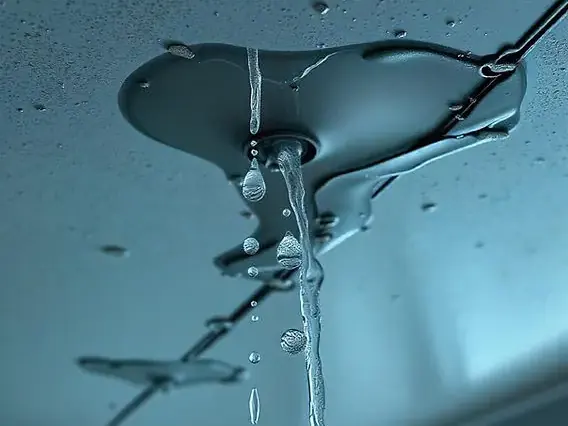
Roof Leak Water Damage in Santa Monica, CA
Santa Monica gets most of its rain in a few heavy winter storms, and flat roofs with parapets are where it finds a way in. The restoration team dries the ceilings, walls and attic the water reached.
(888) 563-9619Rain coming through the ceiling? Call nowHow roof leak water damage is handled in Santa Monica
Roof water travels before it shows, so the drying team follows it through the attic, ceilings and walls with thermal imaging. Wet insulation comes out, saturated ceilings are opened and the structure is dried while the roofer seals the source.
First steps for roof leak water damage in Santa Monica
- 1
Catch the water
Put buckets and towels under drips and move belongings out of the way.
- 2
Relieve a bulge
If a ceiling bubble holds water, keep clear and call; do not stand under it.
- 3
Get the roof covered
Have a roofer or the owner tarp or patch the roof once it is safe.
- 4
Photograph inside and out
Record ceilings, walls and any visible roof damage with dates.
What does roof leak water damage cost in Santa Monica, CA?
In Santa Monica, CA, roof leak water damage restoration typically runs $900 to $6,500, depending on how many rooms the water reached, whether ceilings and insulation must come out, the ceiling material and how long the leak ran before drying started. The roof repair is priced separately.
One ceiling area
- Ceiling and wall mapping
- Dry-in-place where possible
- Daily readings
Several rooms
- Wet insulation removed
- Ceiling sections opened
- LGR dehumidifiers
Flat roof, wall runs
- Walls and window heads opened
- Extended plaster drying
- Storm claim file
For a closer planning number, try the water damage cost calculator. The final price is set by the restoration company once it has seen the loss.
How roof leak water damage is dried in storm season
- 1
Map the moisture
Before a single fan is set, the tech who does the walkthrough scans floors, walls and ceilings with thermal imaging and pinless meters and draws the wet edge.
- 2
Pull the water
The extraction crew pulls standing water out through truck-mounted hoses or portable units, whichever reaches the unit, so it leaves the building.
- 3
Set the drying
The drying team places air movers and LGR dehumidifiers room by room, sized to the load and to how damp the coastal air is that week.
- 4
Read, log, verify
Every day the readings go into a log, and the equipment stays until each wet material matches its dry reference within 2 to 4 points.
Santa Monica averages only about 13 inches of rain a year, but most of it arrives between December and March, often in a few heavy atmospheric river storms. Roofs that sat dry all summer suddenly carry days of wind-driven rain. That is when leaks that were building for years show up at once.
Why Santa Monica roofs leak in storms
- Flat roofs with parapet walls on Spanish-style homes and apartment buildings, where water ponds if a scupper or drain is clogged
- Clay tile roofs where the tile is fine but the underlayment beneath it has worn out
- Flashing at chimneys, skylights and parapet caps that has cracked in the sun and salt air
- Roof drains and downspouts packed with leaves and debris from the dry months
Inside the house: what the water reaches
Roof water rarely drips straight down. It travels along the roof deck, joists and wall framing before it shows as a stain, sometimes far from the actual leak. In a flat-roof building it can run into the top of an exterior wall and appear at a window head or baseboard. The tech who does the walkthrough uses thermal imaging to follow the wet pattern through ceilings and walls so drying covers all of it.
A roofer or the building owner handles the roof. Tarping or temporary patching during a storm keeps more water from coming in while the interior is dried.
Drying ceilings, walls and the attic
Wet insulation is removed from the attic or ceiling cavity, ceilings are opened where drywall or plaster is saturated, and air movers and LGR dehumidifiers dry the structure. Storm season air is damp, so dehumidifiers matter as much as air movers. Readings are logged daily until framing and ceilings meet the drying goal. Rain water from a roof is usually clean when it enters, but water that sat in an attic or ran through debris may be treated as Category 2. The National Weather Service Los Angeles office posts storm warnings for the Westside, and Ready.gov covers storm preparation.
Where the team handles roof leak water damage around Santa Monica
The restoration team covers all of Santa Monica, from North of Montana and Wilshire Montana to Ocean Park, Main Street and Sunset Park, plus Venice, Brentwood, Mar Vista and West Los Angeles.
ZIP codes 90401, 90402, 90403, 90404 and 90405.
See every area coveredRoof Leak Water Damage in Santa Monica: common questions
Why did my roof start leaking only this winter?
Leaks often build for years and show up in the first heavy storm after a long dry season. Worn underlayment, clogged scuppers and cracked flashing let water in once rain lasts for days.
Who repairs the roof itself?
A roofer or the building owner repairs or tarps the roof. The restoration team handles the interior: extraction, removal of wet materials and drying.
Why does the stain show up far from the roof leak?
Water runs along the roof deck and framing before it drips. Thermal imaging follows that path so the drying plan covers every wet area, not just the stain.
Does wet attic insulation have to be replaced?
Usually. Soaked insulation holds water against the framing and loses its value. It is removed so the ceiling and joists can dry.
How long does roof leak drying take?
Most contained roof leaks dry in three to five days once the roof is sealed. Plaster ceilings and damp storm weather can add time.
Is roof leak damage covered by insurance?
Interior damage from a sudden storm event is often treated differently from damage caused by long-term roof wear. Coverage depends on your policy, so it is worth checking with your own insurer.
Storm water inside a Santa Monica home? Call now.
Once the roof is covered, the water already inside still has to come out. The drying team handles ceilings, walls and the attic.