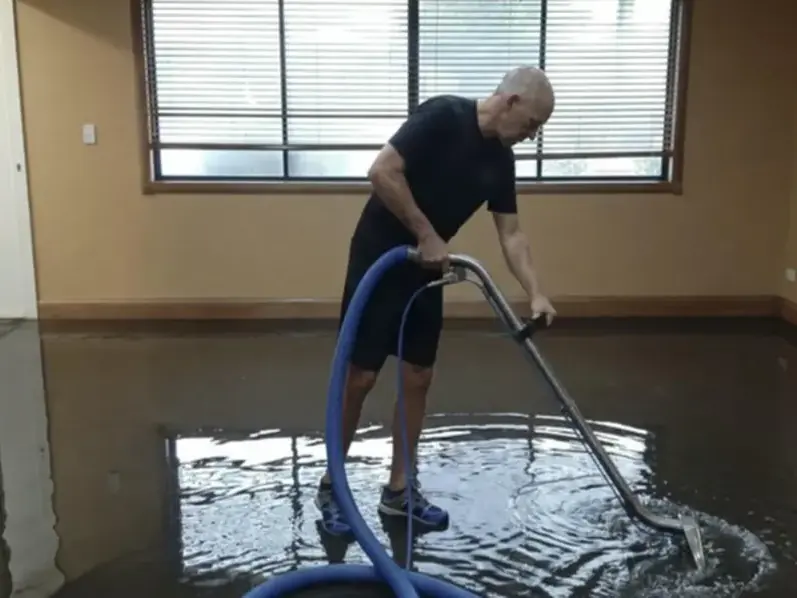
Water Extraction in Santa Monica, CA
Standing water keeps soaking into pad, subfloor and drywall until it is pulled out. The extraction crew removes it first, from a beach cottage floor or a third-floor unit, so drying can start.
(888) 563-9619Water still spreading? Start Santa Monica extractionHow water extraction is handled in Santa Monica
Every loss starts the same way: stop the source, get the standing water out, then find where it went. The extraction crew removes water with truck-mounted or portable units, and the drying team takes over once the meters show what is still wet.
First steps for water extraction in Santa Monica
- 1
Stop the source
Close the fixture valve or the main shutoff if you can reach it safely.
- 2
Cut power to wet rooms
Switch off breakers for wet rooms if the panel itself is dry.
- 3
Photograph everything
Take photos and video before moving furniture or throwing anything out.
- 4
Lift what you can
Move rugs, cords, boxes and electronics off the wet floor and call.
What does water extraction cost in Santa Monica, CA?
In Santa Monica, CA, water extraction typically runs $400 to $2,800, depending on how much water is standing, the flooring type, the water category and whether portable equipment has to be carried to an upper unit. Drying is priced on top of extraction.
One room, clean water
- Wand or weighted extraction
- Baseboards checked
- Moisture map started
Several rooms or an upper unit
- Portable units carried in
- Carpet pad lifted
- Unit below checked
Deep or dirty water
- Submersible pumps
- Category 3 handling
- Porous material removal
For a closer planning number, try the water damage cost calculator. The final price is set by the restoration company once it has seen the loss.
From standing water to a dry, documented floor
- 1
Map the moisture
Before a single fan is set, the tech who does the walkthrough scans floors, walls and ceilings with thermal imaging and pinless meters and draws the wet edge.
- 2
Pull the water
The extraction crew pulls standing water out through truck-mounted hoses or portable units, whichever reaches the unit, so it leaves the building.
- 3
Set the drying
The drying team places air movers and LGR dehumidifiers room by room, sized to the load and to how damp the coastal air is that week.
- 4
Read, log, verify
Every day the readings go into a log, and the equipment stays until each wet material matches its dry reference within 2 to 4 points.
Extraction is the cheapest drying there is. A gallon pulled out with a wand is a gallon the air movers and dehumidifiers never have to evaporate. In Santa Monica that matters twice over, because the marine layer keeps coastal air damp and slows evaporation, so every bit of water removed by suction shortens the dry-out.
Truck-mounted or portable, depending on the building
A single-story house in Sunset Park or Ocean Park usually allows truck-mounted extraction: the hoses run from the truck to the wet room and the water leaves the building instead of being carried out in buckets. Many Santa Monica buildings are different. Courtyard apartments, condos over subterranean parking and mid-rise buildings downtown often put the wet unit several floors and a long corridor away from the curb. There the extraction crew uses high-powered portable units and carries the recovered water to a drain approved for it.
- Carpet and pad: weighted extraction tools press water out of the pad, not just the carpet face
- Hard floors: squeegee wands and floor tools pull water out of tile and plank seams
- Low spots: submersible pumps handle deep water in garages and below-grade rooms
- Wall bases: baseboards come off where readings show water wicking up the drywall
Extraction is judged by the meter, not by how the floor looks. A carpet can feel only damp while the pad under it still holds most of the water.
What happens right after the water is out
Once standing water is gone, the tech who does the walkthrough maps moisture with thermal imaging and pinless meters to find where water traveled under flooring and into wall cavities. The map sets how many air movers and LGR dehumidifiers each room gets and where they stand. Readings are taken every day until the wet materials match a dry reference in an unaffected part of the home.
If the water came from outside, a toilet or a drain, it is treated as Category 2 or 3, and porous materials it touched are removed rather than dried. The EPA page on cleanup after water damage explains why fast drying matters, and Ready.gov flood safety covers staying safe around standing water and wet electrical outlets.
Extraction in condos and apartments
In a stacked building the water rarely stays in one unit. The extraction crew checks the unit below, the hallway and any shared walls, because water that is extracted in one unit and left in the ceiling of the next keeps the whole building wet. Building managers and HOA boards usually want the moisture readings for every affected unit, and those readings go into the job file.
Where the team handles water extraction around Santa Monica
The restoration team covers all of Santa Monica, from North of Montana and Wilshire Montana to Ocean Park, Main Street and Sunset Park, plus Venice, Brentwood, Mar Vista and West Los Angeles.
ZIP codes 90401, 90402, 90403, 90404 and 90405.
See every area coveredWater Extraction in Santa Monica: common questions
How fast should standing water be extracted?
As soon as possible. Materials keep absorbing water while it sits, and mold can start growing within 24 to 48 hours. Extraction first, drying second, is the order that keeps a loss small.
Can carpet be saved after extraction?
Clean-water carpet pulled out fast is often dried where it lies, while the cheaper pad underneath is usually swapped. Carpet that sewage or outdoor runoff reached goes out.
What if the unit is on an upper floor?
Portable extraction units are carried to the unit when truck hoses cannot reach. The crew also checks ceilings and walls in the unit below for water that has already moved down.
Is a shop vacuum enough?
A shop vacuum removes surface water but not the water held in pad, subfloor seams and wall bases. Professional extraction tools press water out of those layers, and meters confirm what is left.
Why does drying take longer near the beach?
The marine layer keeps the outdoor air humid, so opening windows does not dry a room the way it might inland. LGR dehumidifiers control the indoor air so drying keeps moving.
Does insurance cover water extraction?
Extraction after a sudden, accidental loss such as a burst supply line is commonly part of a covered claim. Coverage depends on your policy, so it is worth checking with your own insurer.
Standing water in a Santa Monica home or unit? Call now.
Every hour water sits, it moves deeper into pad, subfloor and the unit below. The extraction crew pulls it out and the drying team finishes the job.